
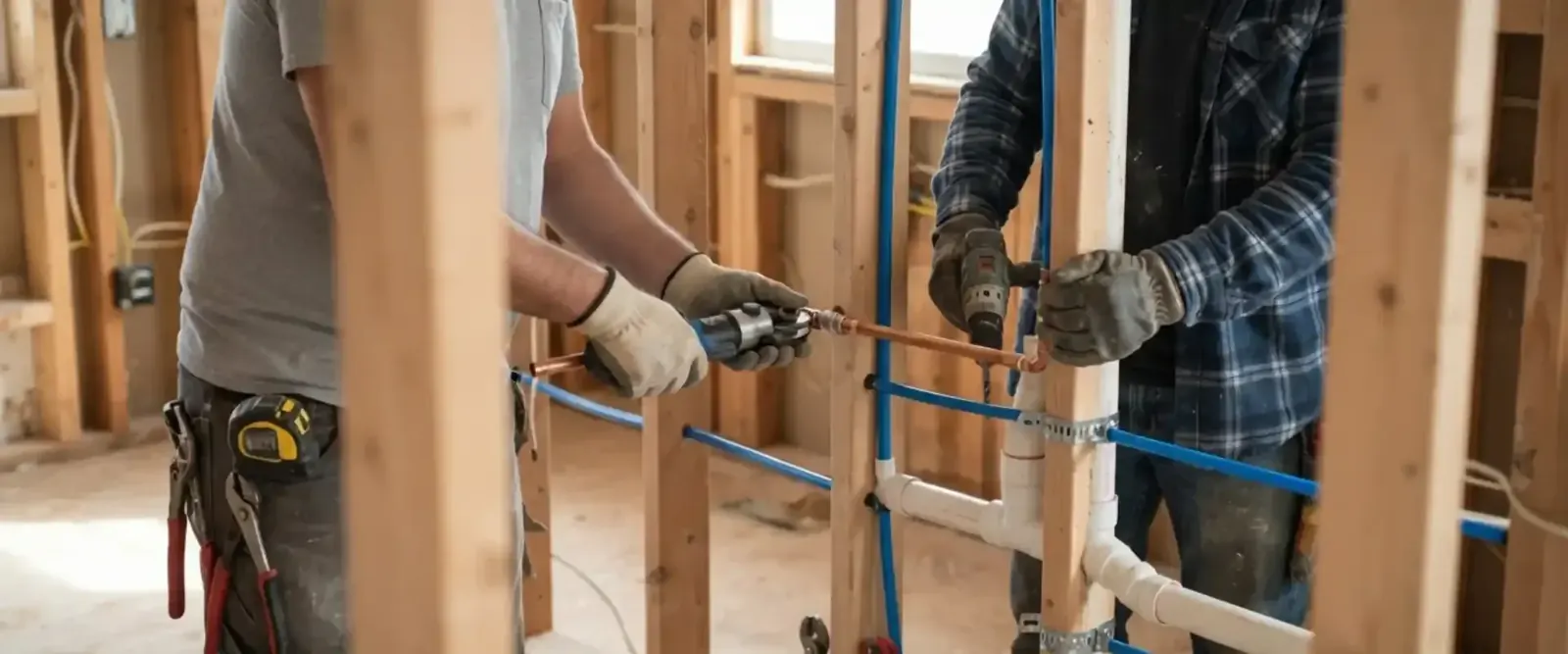
Start with the drain and vent
Drains rely on gravity, so the drain layout comes first. Each fixture needs a trap, a branch drain that slopes toward the stack and a vent to let air in. A toilet needs a larger drain than a sink, and a shower needs a trap just below the floor. The main drain must connect to the building drain or sewer at a point lower than the new fixtures.
Venting is the part beginners miss. A vent lets the drain flow freely and protects trap seals from siphoning. It can run through the wall and up to the roof, or tie into an existing vent within code limits. A wrong vent causes gurgling and slow drains even when the pipe is clean.
The rough-in order
- Drains and ventsSet the toilet flange, shower drain, sink drain and vent runs.
- Supply linesRun hot and cold lines to each fixture, with shutoff valves.
- Inspect and testPressure test supply and water-test drains before covering.
- Finish plumbingAfter walls and floors are done, set fixtures and trim.
A basement bathroom: the extra decision
Below-grade bathrooms often sit lower than the main sewer line.
| Situation | Solution | Consideration |
|---|---|---|
| Drain sits above the sewer line | Gravity drain | Simplest and quietest |
| Drain sits below the sewer line | Sewage ejector pump | Needs a basin, power and a vent |
| Slab must be cut | Trench in the concrete | Adds cost and dust |
A below-grade bathroom is the most common reason a bathroom project grows. See our plumbing installation page for the work we handle.
What to settle before you start
- Fixture list and sizes, including toilet rough-in distance from the wall.
- Drain location in relation to the existing stack or sewer line.
- Vent route to a roof termination or an existing vent.
- Water supply capacity, including pipe size and pressure.
- Permit and inspection schedule before walls close.
Permits, code and water in Lake Stevens
Washington's state plumbing code, WAC 51-56, adopts the Uniform Plumbing Code (UPC) with state amendments. New bathroom plumbing is typically inspected, and inspections come before walls are closed. Ask the City of Lake Stevens building department what your project needs.
Washington licenses plumbing contractors and certifies plumbers through the Department of Labor and Industries. Its Verify page lets you check a plumber or contractor by name. Use a licensed professional for new work, since a mistake inside a wall is costly.
Snohomish County PUD supplies water to Lake Stevens and lists total hardness between 9 and 89 ppm, averaging 73. The sewer is run by the Lake Stevens Sewer District, which can tell you where your side sewer connects before you plan a basement bathroom.
Adding a bathroom? Call and walk through the plumbing plan.
Call (360) 371-6092Fixture clearances and layout choices
Layout decisions made on paper save money later. A toilet needs clear space on each side of its centerline and in front of the bowl, and building codes set minimums for these distances. A shower needs a minimum interior size, and a vanity needs enough room that a door or drawer can open without hitting the toilet. Check the current code with the City of Lake Stevens building department before you frame.
Group fixtures where you can. Plumbing walls that back onto each other, such as a bathroom and a laundry room, cut the length of pipe and make the job simpler. A new bathroom far from the existing stack means longer drain runs, more venting and more cost.
Think about the water heater, too. A bathroom far from the heater waits longer for hot water and wastes water in the meantime. A recirculation line or a small point-of-use heater are options a plumber can describe if your layout makes distance unavoidable.
Common mistakes in new bathroom plumbing
The most common problems are a toilet drain with too little slope, vents that connect too low, supply lines that run through a cold exterior wall and missing access panels behind shower valves. Each one is cheap to fix before drywall and expensive after.
Lake Stevens went from 6,361 residents in 2000 to 28,069 in 2010, so many older bathrooms are now being remodeled. We also serve nearby areas, and our Marysville emergency plumber page and the service area page list where we dispatch.
Questions we hear
What is rough-in plumbing?
The pipes inside the walls and floors that are installed before finishes, including drains, vents and supply lines.
Do I need a vent for every fixture?
Each fixture must be vented, but fixtures can share a vent within code limits.
Can I put a bathroom in my basement?
Yes, but a below-grade drain may need a sewage ejector pump. A plumber checks the sewer elevation.
Do I need a permit in Lake Stevens?
New bathroom plumbing is commonly inspected. Ask the City of Lake Stevens building department what your project needs.
How long does bathroom rough-in take?
A typical rough-in takes a day or two, depending on layout and access.
Ready to plan your bathroom plumbing? Call for a clear price.
Call (360) 371-6092