
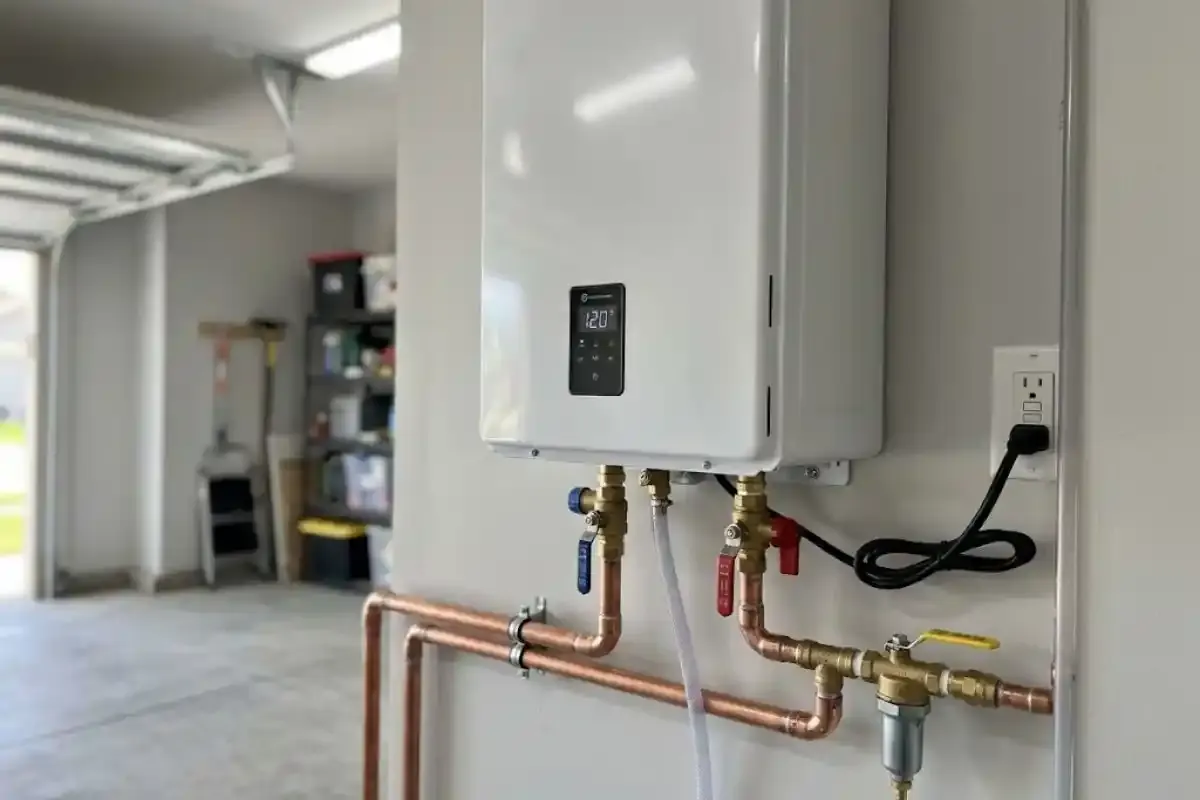
What people mean by a tankless water heater cover
A tankless water heater cover is a shell, box or wrap placed around the unit. Some are weatherproof enclosures made for outdoor-rated heaters. Others are insulating blankets, or decorative boxes people build to hide a wall-mounted unit. The goal of each one is different, so the first question is why you want it.
The short answer is this: indoor heaters should never be wrapped or boxed in without the manufacturer's approval, and outdoor-rated heaters should be covered only with accessories the manufacturer lists. A cover that blocks the air intake or the exhaust can overheat the unit and trigger error codes.
Cover types and when they are appropriate
| Cover type | Purpose | Concern |
|---|---|---|
| Manufacturer enclosure or recessed box | Weather protection for an outdoor-rated unit | Fine when it is the maker's listed accessory |
| Insulating wrap on pipes | Slows heat loss and helps with cold-weather protection | Wrap the pipes, not the heater body or vent |
| Homemade box | Hides the unit | Can block combustion air and trap heat |
| Tarp or loose cover | Keeps rain off | Can block the exhaust and hold moisture |
Outdoor-rated units and Western Washington weather
Outdoor tankless heaters are built to shed rain and handle cold, with internal freeze protection that runs when power is on. That protection works only if the unit has power and a gas supply. If the power fails during a cold snap, the heater and the pipes can still freeze.
Snohomish County Emergency Management issues winter weather notices for the county, and Lake Stevens falls inside it. Cold snaps do not arrive every year, but they do arrive. Insulate the exposed supply and return pipes, keep the heater powered and know where the water shutoff is. Our burst pipe repair page explains what to do if a line splits.
Before you add any cover, check these
- Read the manual for approved accessories and minimum clearances.
- Keep the intake and exhaust clear. Direct vent units need open air at both terminals.
- Do not wrap the heater body. Heat needs a path out.
- Insulate the pipes, especially the first few feet of hot and cold lines and any exposed valves.
- Leave service access. The plumber must reach the front panel, filter and service valves.
Lake Stevens conditions that matter for covers
Lake Stevens is about 6 miles east of Everett in Western Washington, where the weather is often wet. Rain and damp air are hard on exposed metal and electronics, which is why an outdoor-rated unit is built to resist them. A manufacturer-approved enclosure helps more than a homemade one.
The Snohomish County PUD water quality report lists total hardness between 9 and 89 ppm for its Lake Stevens system, averaging 73. A cover does nothing for scale. What helps is a yearly flush and descale of the heat exchanger, which our tankless water heater service covers.
Lake Stevens went from 6,361 residents in 2000 to 28,069 in 2010, and many newer homes mount tankless units on a garage wall or exterior wall. Check the clearances to windows, doors and the neighbor's fence before you decide on any enclosure.
Not sure what your tankless unit needs? Call and describe where it is mounted.
Call (360) 371-6092Questions to ask before you build a cover
Before you spend money on any enclosure, read the installation manual for your exact model. The manual lists required clearances, whether the unit is rated for the location and what the maker allows around the vent and the gas connection. Anything you build must leave those clearances open and must never block the vent termination or the combustion air.
Ask yourself what the cover is for. If the goal is looks, a painted panel with generous gaps is usually enough. If the goal is protection from weather, check whether the unit is rated for outdoor use at all, since a cover does not turn an indoor model into an outdoor one. If the goal is noise, remember that a closed box traps heat and can cause the unit to shut down on a high temperature fault.
Whatever you choose, keep a service panel you can remove in under a minute. A plumber who cannot reach the unit quickly will charge for the time it takes to take your cover apart, and a homeowner who cannot see the display will miss an error code that would have saved a service call.
Indoor tankless heaters: do not box them in
Indoor tankless heaters pull combustion air from the room or from a vent pipe, and they expel exhaust through a vent. They need clearance around the cabinet, and boxing them in can starve them of air. If you want to hide the unit, a ventilated closet door that the manufacturer allows is better than a sealed box.
Never store paint, solvents or cleaning products near a gas heater. Fumes can be drawn into a heater that takes combustion air from the room. If you smell gas, leave the house and call the gas utility or 911.
Homeowners near Marysville will find the same rules apply, and our Marysville plumber page lists what we handle there. See the full service area for other nearby towns.
Questions we hear
Do I need a cover for my outdoor tankless water heater?
Only if the manufacturer lists one. Outdoor-rated units are built for weather, and a homemade cover can block airflow.
Can a cover cause error codes?
Yes. A cover that blocks the air intake or exhaust can overheat the unit or interrupt combustion, which often shows up as an error code.
How do I protect an outdoor tankless heater from freezing?
Keep the unit powered and supplied with gas, insulate exposed pipes and know where to shut off the water. Built-in freeze protection works only with power.
Does the Lake Stevens climate threaten a tankless unit?
Western Washington cold snaps are less frequent than in colder regions, but county emergency management does issue winter weather notices. Prepare for them before they arrive.
Can you service my tankless heater if it has a cover?
Yes, but we need access to the panel and service valves. Tell us what is on the unit when you call.
Need a tankless inspection or flush? Call and ask about service.
Call (360) 371-6092