
Start here: stop the water and get the right plunger
If the bowl is rising, do not flush again. Lift the tank lid and push the flapper down or close the shutoff valve on the wall behind the toilet. That keeps more water from reaching the bowl. Put towels on the floor and open a window if the room is small.
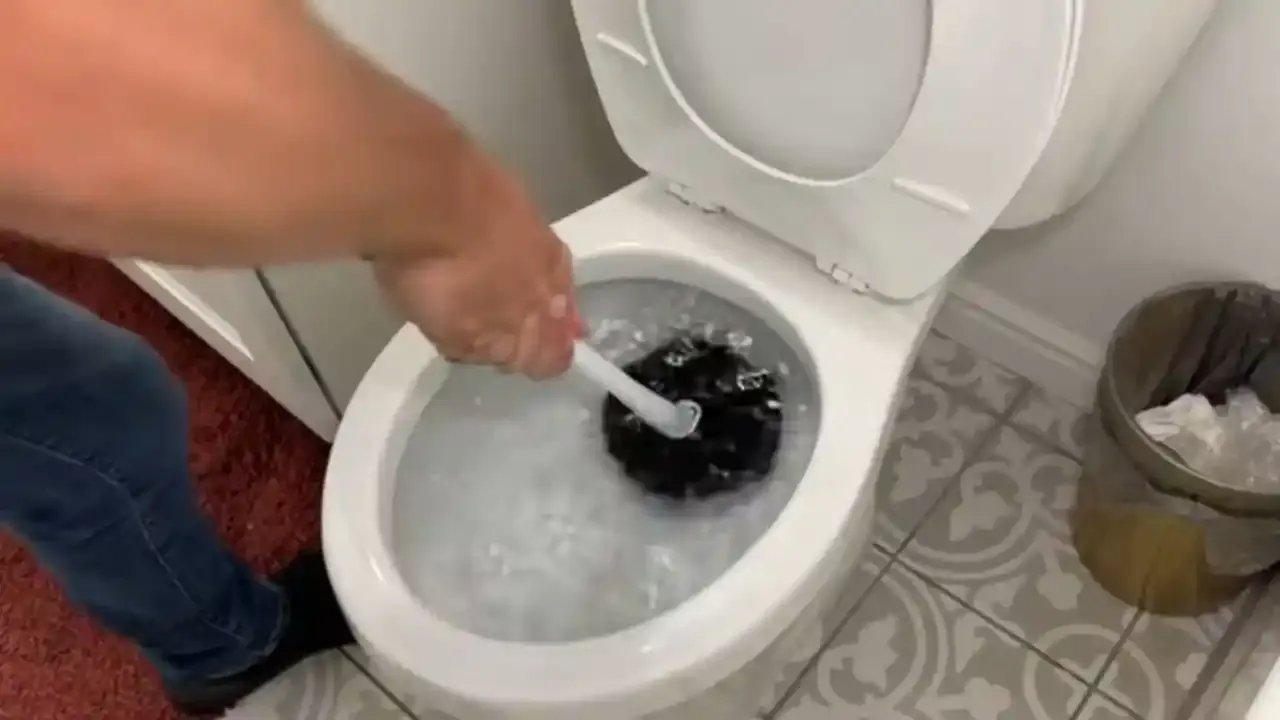
Use a flange plunger, not a flat cup plunger. The flange fits into the toilet's outlet and makes a better seal. Press down slowly to push the air out first, then pump firmly for 15 to 20 seconds. A good clog gives way with a gurgle, and the water level drops.
The order that works for most clogs
- Plunge with a flange plunger, sealing the outlet before you push.
- Add hot, not boiling, water and dish soap. Boiling water can crack porcelain.
- Try a closet auger. Feed it into the bowl, crank gently and retrieve the clog or break it up.
- Flush once only after the bowl drains, with the shutoff valve ready.
- Stop and call if water keeps rising or the toilet gurgles when other fixtures run.
Mistakes that make a clog worse
Chemical drain openers are the biggest one. They are not designed for toilets, can sit in the bowl and burn skin, and make a plumber's work riskier. A wire coat hanger scratches porcelain and rarely reaches the plug. A repeated flush may flood the floor.
Another mistake is ignoring what clogs a toilet in the first place. Flushable wipes, paper towels, feminine products and dental floss do not break down like toilet paper. If a toilet clogs more than once a month, look at what is going down it.
When it is not just the toilet
Where the water goes tells you where the clog sits.
| Symptom | Likely location | What to do |
|---|---|---|
| Only this toilet is slow | Toilet trap or the closet bend | Plunge, then use a closet auger |
| Tub gurgles when the toilet flushes | Shared branch line | Call a plumber for cabling |
| Several fixtures slow, or a floor drain weeps | Main sewer line | Stop using water and call |
| Toilet clogs repeatedly after clearing | Partial blockage downstream, or a belly | Camera inspection |
If several drains are backing up, see sewer line cleaning. For repeat clogs in one drain line, our drain cleaning page explains cabling and jetting.
Toilets and sewers in Lake Stevens
Lake Stevens homes connect to the sewer system run by the Lake Stevens Sewer District. If your toilet clogs along with the neighbors' drains, the problem may be in the district's main, and the district is the one to call. If only your house has trouble, the clog sits in your private line.
Many Lake Stevens homes were built during the growth after 2000, with plastic drain pipe that rarely corrodes but can still catch wipes, grease and roots. Older homes near downtown and the lake date from the 1960s and 1970s and may have cast iron or clay behind the toilet, which has rough interior walls that catch debris.
Federal rules set toilets at 1.6 gallons per flush from 1994, so homes built since then should flush well. A 1980s toilet in an older home can be a repeat offender, and replacement may be the better choice. See our toilet repair and installation page.
Plunger not working? Call the 24/7 line and describe the clog.
Call (360) 371-6092Plunger technique that actually works
Most toilet clogs clear with the right plunger used the right way. A flange plunger, the kind with a soft rubber lip that folds out, seals the drain opening far better than the flat cup type made for sinks. Make sure there is enough water in the bowl to cover the cup, then press down gently first to push out the air, seal the opening and pump with steady strokes.
Pulling back matters as much as pushing, because the suction helps break the blockage loose.
Give it a dozen firm strokes before you check. If the water drains, flush once to confirm. If it rises toward the rim, stop and wait before trying again so you do not overflow the bowl. Never flush again while the bowl is nearly full, and never add chemical drain cleaner to a toilet. Those products can splash back and can make a later plumbing visit more hazardous.
Keep a closet auger on hand if clogs repeat. It reaches past the bowl trap, and it avoids scratching the porcelain. If you have used both tools and the water still will not move, or if other drains in the house gurgle when you flush, the blockage is probably farther down the line and a plumber should look at the main drain.
When to call a plumber
Call if water rises toward the rim and does not drop, if more than one fixture is slow, if sewage smells return or if the toilet has clogged three times in a month. These point to a clog past the toilet or a damaged pipe. A camera inspection tells you which.
In the Marysville area, our Marysville emergency plumber page explains how we dispatch there. For other nearby towns see the service area page.
Questions we hear
Can I use boiling water to clear a toilet?
No. Boiling water can crack the porcelain. Use hot tap water with a squirt of dish soap and give it a few minutes.
What is the best tool to unclog a toilet?
A flange plunger first, then a closet auger. They are inexpensive and work on most clogs.
When is a toilet clog a sewer problem?
When several fixtures slow together, a floor drain weeps or the toilet gurgles when other water runs, the clog is probably in the main line.
Who do I call in Lake Stevens if neighbors have the same problem?
Call the Lake Stevens Sewer District, since a district main may be involved. If only your house is affected, call a plumber.
Why does my toilet keep clogging?
Wipes and paper products are common causes. A partial blockage downstream or a weak flush can also be to blame, and a camera finds out which.
Toilet still clogged after plunging? Call and a plumber will take it from here.
Call (360) 371-6092