
How UV dye leak detection works
A UV leak detection kit has a fluorescent dye and an ultraviolet flashlight. You add the dye to the system, let it circulate, then scan the suspected area in a dark room. Dye that escapes through a crack or loose fitting glows bright green or yellow under the light, pointing to the leak.
The method is borrowed from car air conditioning and refrigeration work. In plumbing, it is most useful where you can see the pipe or fixture and the leak is small. It is less useful when the pipe is buried in a wall or under a slab.
Where UV dye helps and where it does not
| Situation | UV dye | Better tool |
|---|---|---|
| Toilet tank slowly leaking into the bowl | Works well, add dye to the tank | None needed |
| Drip at a visible fitting or valve | Works, scan with the light | Visual check |
| Leak inside a wall or ceiling | Rarely, unless the area is open | Acoustic listening and thermal imaging |
| Leak under a concrete slab | No | Acoustic listening and pressure test |
| Buried line from the meter to the house | No | Meter test and listening equipment |
Using a UV kit safely and well
- Read the dye label. Use dye made for potable water only if the dye will enter drinking water lines.
- Darken the room and scan slowly, since glow is faint in daylight.
- Wear the supplied glasses and avoid shining the light into eyes.
- Wait the right time. Slow leaks may take hours for dye to appear.
- Photograph any glow so you can show a plumber exactly where it showed.
Meter tests and what plumbers use instead
The cheapest leak test is the water meter. Turn off every fixture, check the meter dial or leak indicator and wait 20 minutes. If it moves, water is leaving the system somewhere. Then close the house main. If the meter stops, the leak is inside, and if it keeps moving, the leak is between the meter and the house.
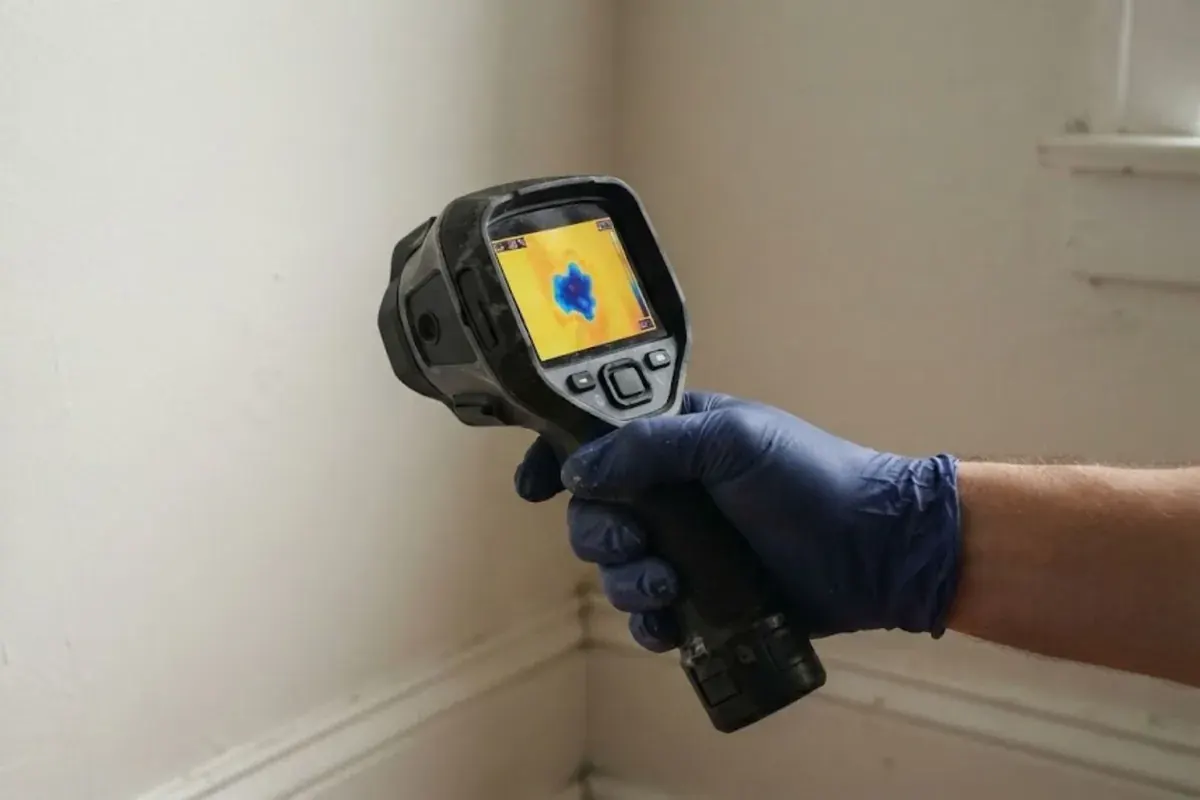
Plumbers add acoustic listening devices, which detect the sound of water escaping from a pressurized pipe, and thermal imaging cameras, which show temperature differences from hot leaks. Moisture meters confirm wet drywall or wood. These tools find the leak without tearing out finished surfaces.
Water use and leaks in Lake Stevens
Snohomish County PUD supplies Lake Stevens and bills by meter. Its water utility phone number is 425-397-3000, and PUD staff can explain how to read your meter and compare recent usage. A bill that climbs without a change in household use is often the first sign of a leak.
Lake Stevens covers about 9 square miles, and the city grew from 6,361 residents in 2000 to 28,069 in 2010. Homes from the 2000s growth usually have PEX supply lines and plastic drains, where leaks tend to appear at fittings and fixtures, which is where UV dye is most useful. Older homes from the 1960s and 1970s may have copper or galvanized pipe that corrodes through over decades, where a leak can hide in a wall.
Washington's state plumbing code, WAC 51-56, adopts the Uniform Plumbing Code (UPC) with state amendments. If a leak repair involves cutting pipe or replacing sections, ask the City of Lake Stevens building department whether the work needs a permit.
Leak you cannot find with dye? Call and we will bring listening gear and thermal imaging.
Call (360) 371-6092Reading the clues in your own house
Before you buy a kit or call anyone, look for patterns. A stain that grows after rain points to a roof or window problem, not a plumbing one. A stain that grows with no rain and appears below a bathroom suggests a supply line or drain leak above. A damp spot that follows hot water use points to a hot line, while one that stays steady points to a cold line or a drain.
Listen, too. A faint hiss in a quiet house at night, with every fixture off, is a classic sign of a pressurized leak. Running water sounds in a wall when nothing is on deserve the same attention. Note where the sound is loudest and tell the plumber, since it saves search time.
Keep a record of your meter readings. Write down the reading before bed and again first thing in the morning with nothing running. A change overnight is strong evidence of a leak and gives a plumber a head start.
When a UV light is not enough
If you suspect a leak behind a wall or under a slab, skip the dye and call a plumber. Dye cannot reach these places, and a long delay lets water damage building materials. Warning signs include a warm floor, a persistent musty smell, bubbling paint or a stain on a ceiling.
For help finding hidden leaks, see our leak detection page. If a pipe has already split, our burst pipe repair crew handles the repair. Homeowners near Marysville can read our Marysville emergency plumber page, and the service area page lists other towns.
Questions we hear
Does a UV leak detection light work for plumbing?
It works for slow leaks you can reach, such as a toilet tank or an exposed fitting. It does not work for leaks in walls, under slabs or in buried lines.
Is leak detection dye safe?
Use dye made for the system you are testing and follow the label. Ask a plumber if the dye might enter drinking water.
How long does dye take to show a leak?
It depends on the leak size. Fast leaks show within minutes, and slow ones can take several hours.
How do I know if I have a leak without tools?
Check the water meter with all fixtures off. If it moves, water is escaping somewhere.
Who can I call about a high water bill in Lake Stevens?
Snohomish County PUD supplies the water. Call its water utility line at 425-397-3000 to ask about your meter and usage.
Meter moving with everything off? Call and we will find the leak.
Call (360) 371-6092